Black-Grass: The Definitive Resource
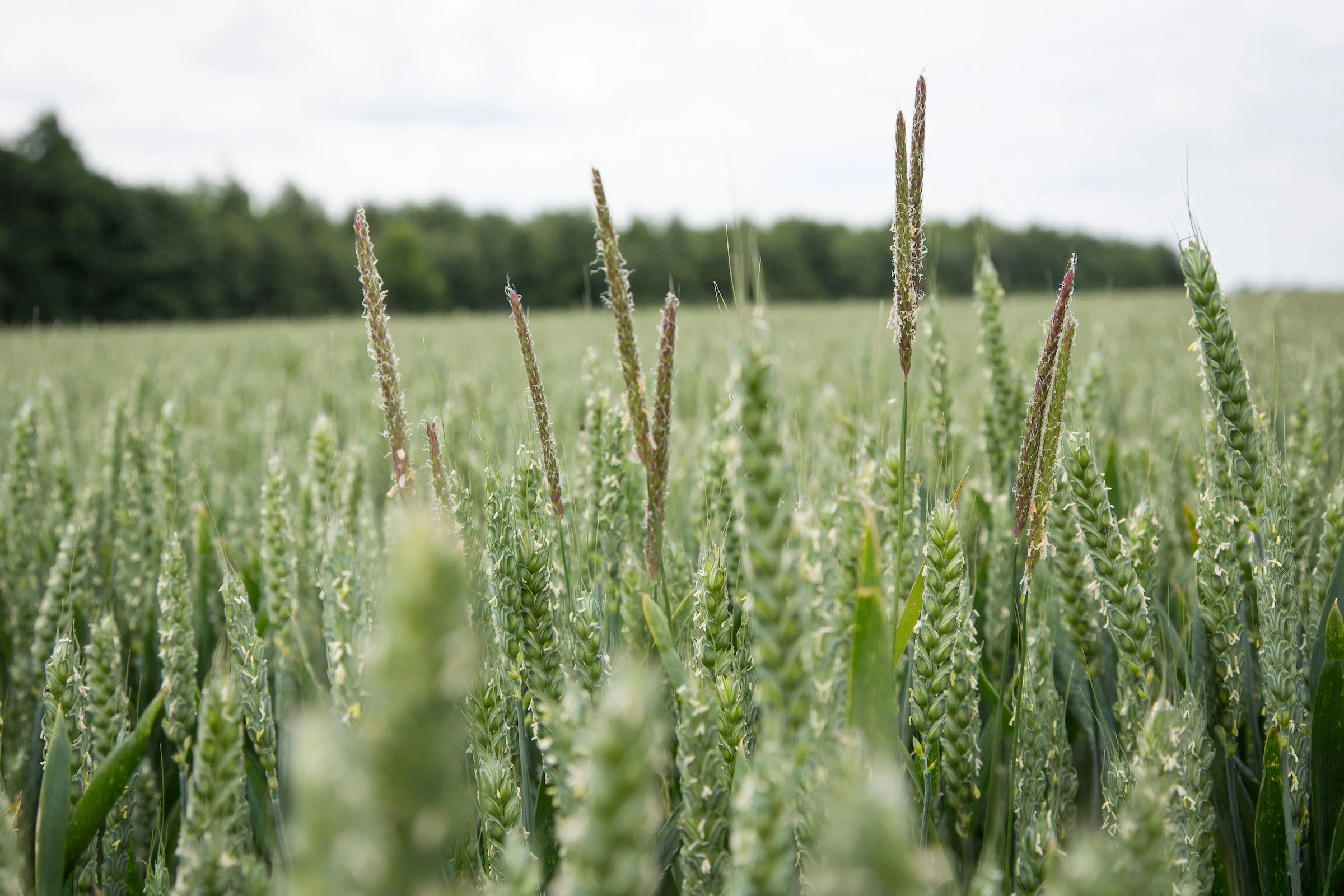
Controlling black-grass is a year-round task, using a wide range of cultural and chemical controls.
Getting the most from your wheat crop means making smart decisions throughout the season to get the best control of threats to your yield from diseases, weeds and pests.
Wheat that established well in the autumn has come through the early winter well. Spells of cold weather in December and January helped to harden-off more forward crops and dampen down any emerging yellow rust in susceptible varieties.
According to Bayer’s recent survey, there is a larger area of wheat being grown this season. The most popular variety at 19% being Group 2 KWS Extase, followed by Group 4 wheats Graham and Gleam. These varieties present different challenges in the months ahead and crops of Gleam will require close monitoring for Yellow Rust during February.
The main priority during February will be to control any surviving grass-weeds that have made it through the winter, if weather and ground conditions allow.
A new contact herbicide option for growers this spring is Atlantis Star. This coformulation of three ALS-Inhibitors (HRAC Group 2) adds thiencarbazone to mesosulfuron and iodosulfuron. Thiencarbazone’s new mode of action supports increased activity on challenging grass-weeds, including Rye-grass and Brome species. Importantly, the formulation of Atlantic Star gives you the option to deliver 15g of mesosulfuron from the 1st February, allowing you to tackle surviving weeds at an earlier stage, when they are smaller and easier to control.
Where broad-leaved weeds are also problematic, Pacifica Plus remains the best all-round control option for mixed-weed populations.
For best results at this time of year consider the environmental conditions when spraying. Apply when grass-weeds are small and actively growing, and to a dry or drying leaf. Avoid spraying during periods of frost.
Experience has shown some benefits to applying Atlantis Star or Pacifica Plus on clear sunny days during high levels of photosynthesis within plants, even when temperatures are low (but above freezing).
February is also a good time to monitor crops for early signs of disease, and assess nutritional needs. Leaf tissue samples can help to assess whether crops could benefit from an early application of Nitrogen to promote tillering.
Priorities now:
Assess grassweed populations and monitor for disease
Apply a contact herbicide if conditions allow
Address any nutritional requirements
Mild temperatures and some dry weather conditions during early February enabled many jobs to be completed, including contact herbicide applications. Colder weather at the end of February has been helpful in holding back some very-forward crops.
For those that haven’t completed their weed control programmes, contact herbicide applications are a priority this month. From 1 March, 0.5L/ha of Pacifica Plus can be applied where mixed weed populations and brome species are the main target.
Atlantis Star is a new herbicide option for this spring. The coformulation of three ALS-Inhibitors (HRAC Group 2) adds thiencarbazone to mesosulfuron and iodosulfuron and is ideal where challenging grass-weeds, including Rye-grass and Brome species are present.
At the end of Fenruary there were few reports of Yellow Rust being spotted, but Septoria can be found readily in crops, with warm temperatures helping it to cycle. As the month continues, we are likely to see disease levels increase, particularly Yellow Rust.
In the south of the UK, the end of March coincides with GS30 (first node detectable) and T0 applications. The main disease focus at T0 is Yellow Rust, and Powdery Mildew if present. Assess the risk to crops from diseases present on plants, and the likelihood of infection between T0 and T1 timings. Pay particular attention to varieties with low resistance scores for Yellow Rust.
An application of 100 – 150g/ha of tebuconazole, or a strobilurin with a mix partner, are recommended at T0. The addition of Folpet can reduce the Septoria threat before T1. Ensure the timing of your T0 application doesn’t not reduce the gap between T0 and T1 to less than 3 weeks.
Priorities now:
Complete weed control programmes
Monitor for disease, especially in varieties with low resistance scores
Plan T0 applications at the end of the month in the south of the UK
March was a difficult month for most wheat growers, with crops held back by cold weather, and wet ground preventing many field activities. However, the colder weather also held back a lot of disease pressure, including Yellow Rust, although Septoria can quite easily be found.
By the end of March crops are approaching or have already reached GS30 (first node detectable) and where some growers were able to take advantage of the limited spray windows to apply T0s, but for most, this has not been possible. During April, growers will therefore have to decide what to prioritise.
Outstanding grass-weed control should be the first issue to address if this hasn’t been completed, followed by T0 fungicide applications. Remember, if tebuconazole is being applied for disease control, it cannot be applied with herbicide products containing mesosulfuron.
By the third week in April many wheat crops will be reaching GS31 with leaf three fully emerged. This signals the timing for T1 fungicide applications.
At T1 there are a multitude of diseases to be targeted, including Septoria, Yellow Rust and stem-based diseases such as Eye Spot. To better understand the disease pressure facing crops, growers can use Bayer’s CropCheck service, via their local Technical Manager. CropCheck can identify latent Septoria and Yellow Rust present in leaf samples, before lesions are visible in the crop. This can help to aid decisions on fungicide choice and application rates.
For crops under moderate disease pressure, 1L/ha of AscraXpro will provide excellent control of a broad spectrum of diseases present at T1. Where crops are at higher risk of disease, the rate can be increased to 1.2L/ha, with the addition of a multisite (e.g. Folpet) if desired, which will also help with resistance management.
Other priorities this month include a second application of Nitrogen and assessing the need for any micronutrients.
Priorities now:
Complete weed control programmes
Assess disease pressure in the crop, using CropCheck if needed
Plan and apply T1 fungicides
Crops were a mixed bag at the end of April, with cool conditions having slowed growth, and large variations between both varieties and drilling date. Depending on location, growth stages were anywhere between leaf 2 almost fully emerged, and leaf 3 still only at 50% emerged. With that in mind, some T1 applications may be pushed into the beginning of May.
It is vital to inspect the crop and dissect plants to determine which leaf layer is emerging, in order to time applications correctly. This video demonstrates how to identify leaf 3.
Septoria infection is being driven by frequent rain showers, but the cool weather has reduced its ability to cycle within crops. At the end of April Bayer’s CropCheck results showed that the majority leaf 3 samples were clear of Septoria.
However, from around the middle of May, T2 flag leaf applications will be required to keep disease at bay.
Where Septoria is the main disease of concern in the crop, the strongest fungicide option is fenpicoximid, . However, if conditions change, and in varieties with greater tolerance to Septoria, applications of AscraXpro at 1.2 – 1.5 L/ha would be a good choice. If Yellow or Brown rust is present at the time of T2 application then the addition of tebuconazole or a strobilurin, regardless of fungicide choice would be recommended for quick knockdown action..
As well as delivering excellent disease control AscraXpro also provides physiological benefits to the crop, in the form of increased chlorophyll content, nitrogen-use-efficiency, and heat- and drought-stress tolerance.
Bayer’s CropCheck service can aid your fungicide decisions by identifying Septoria and Yellow Rust disease in your crops, including at the latent stage of infection. Ask your local Bayer Commercial Technical Manager for a kit. They can also give you information on disease levels observed in your geographic area to date.
Priorities now:
Complete grass-weed control programmes
Complete T1 and T2 fungicide applications
Assess any crop nutrition needs, including micronutrients
At the end of May most wheat crops are looking good, with good biomass and plenty of potential. Cooler weather and good T2 fungicide timings have held back Septoria on the whole, although it can be found on leaf 3 in early-drilled crops, and any rain in June will send disease rapidly up the plant.
Yellow Rust is now being seen in susceptible varieties and crops which received less-robust T2 fungicide applications i.e., those without a strobilurin or tebuconazole in the mix. It’s important to remain vigilant in these situations and not allow the disease to get away.
Traditionally, T3 fungicide applications are focused on controlling the key diseases that threaten yield and grain quality. Often, this includes targeting Septoria, Brown Rust, and Fusarium. However, this year’s extended cooler weather means Yellow Rust may also need to be controlled.
Timing is key for T3, with fungicides applied around mid-flowering (GS65) to prevent transmission of Fusarium in the crop. This is particularly important when rain occurs around flowering.
Fungicide options at T3 a include a prothioconazole-based product, such as Proline at 0.44L.ha, with the addition of tebuconazole to support Fusarium and rust control. Alternatively, depending on previous fungicide applications, Aviator235Xpro could be used at 1L/ha to cover the key disease spectrum and provide enhanced crop physiological benefits, including enhanced greening.
Other factors to consider during June, include topping up milling wheat crops with a final Nitrogen application to achieve protein specifications, monitoring for late-emerging wild oats that may need removing, and recording any problematic weed-infested areas if fields to prioritise for control in the autumn.
Priorities now:
Monitor crops for disease and apply T3 fungicides
Apply final N to milling wheat
Record problem weed areas for future control
Controlling black-grass is a year-round task, using a wide range of cultural and chemical controls.

If you have a quesction about our products on your crops, please contact your nearest technical manager