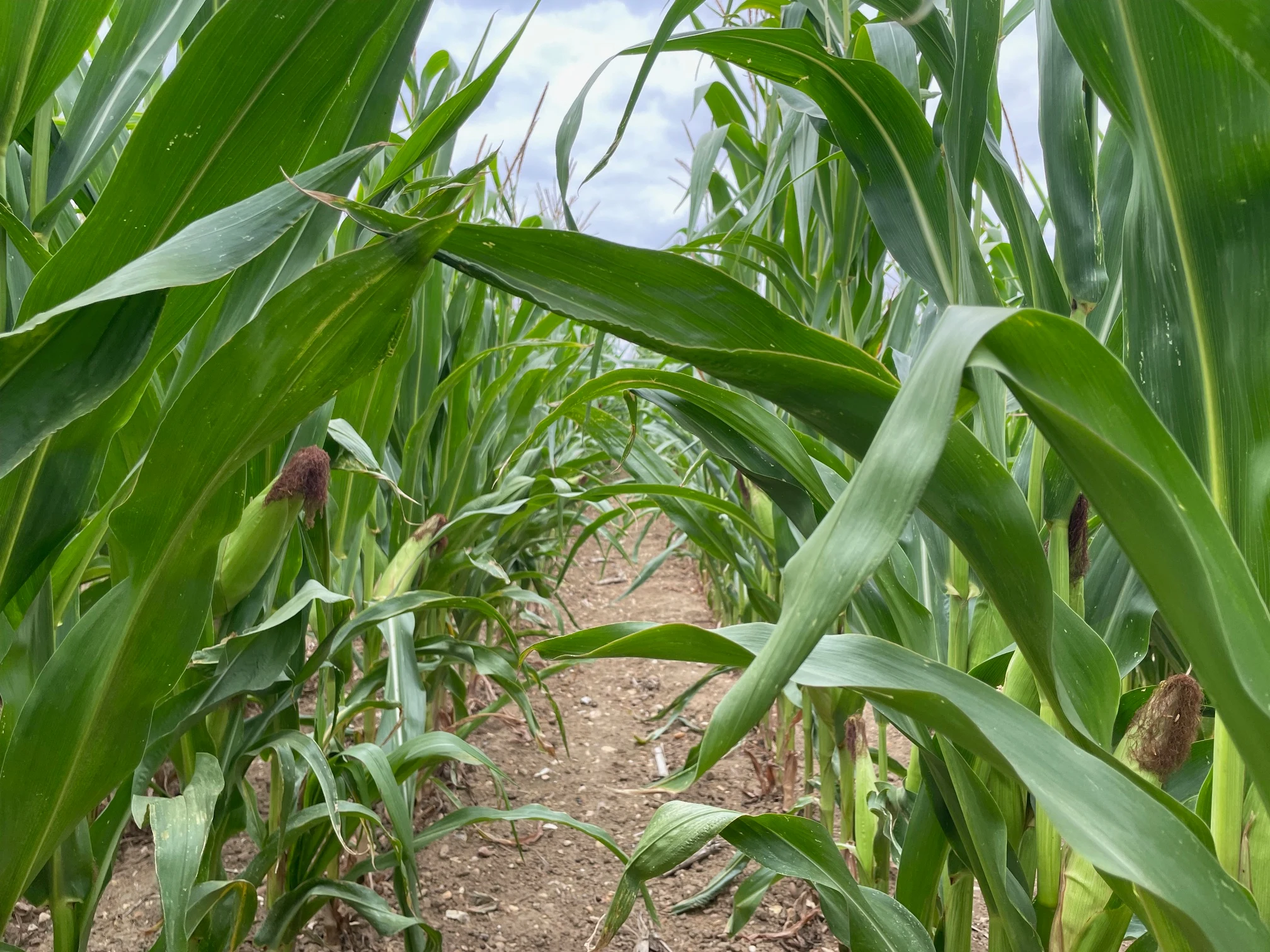
Introducing DKC2742
A high-output early/maincropmaize variety for silage and biogas
FAO score 190
Excellent early vigour when early and late drilled
Large, flat leaves provide maximum sunlight absorption, while stay-green technology ensures excellent weed suppression and increases harvest fresh weight
Strong resistance to root lodging and brackling when tested on Less Favourable and Favourable sites over multiple seasons
Good resistance to eyespot and fusarium
Early/maincrop maturity suitable for various climates with high yield potential
Outstanding dry matter (DM) yield on both Favourable and Less Favourable sites
Author
Bayer Crop Science | 26th January 2026We Highly Recommend:
Careful variety choice keeps maize in the rotation
When the Covid pandemic brought supplies of hospitality food waste to a standstill, south Hertfordshire farmer Howard Williams needed to find an alternative feedstock for the 1.5 megawatt/hour biogas plant at Cattlegate Farm, near Enfield.
He found a solution in maize and forage rye and four years later, while food waste supplies are back on track - the plant takes up to 30,000 tonnes per annum - Howard is still growing maize.
Farming on heavy London clay at Cattlegate Farm near Enfield and on much lighter land over gravel 10 miles away at Noke Farm near St Albans, he is finding maize works well as a break crop on both soil types, both agronomically and financially.
“The supply of food waste has gone back up in the last 18 months to the point that we are now completely maxed out at our plant at home, but over the last two or three years, we’ve developed a market for the maize. Some goes to other AD plants, and some to livestock farms for forage,” says Howard.
“Maize is now the main break crop on the gravel farm. We still grow oilseed rape as well on the home farm, but it is surprising how well maize has lent itself to the rotation.
“We find it does well on the gravel compared to other spring break crops because it performs well when water is limited. We are working towards half wheat, half maize, which will be about 50 hectares of each,” he adds.
However, with the two farms’ 182ha of maize grown on two very different soil types, careful variety choice is essential, says Howard’s agronomist, Barry Williams of ProCam.
“Basically, we want the earliest variety we can get on the clay - one that can go in late and come off early.
Care is needed with heavy machinery on the clay soils, where travelling in wet conditions can result in damage to soil structure that will persist for several years.
“In the four years Howard has been growing maize, we've had seasons when we could drill in April and seasons when we couldn’t drill until June.
“We have to manage what we can and create the best possible growing season in the shortest possible window, because we want to follow the maize with a first wheat. If we don’t follow with wheat, the system doesn't stack up.
“On the gravel, we will grow a maincrop variety because the land travels so much more easily all year round,” says Barry.
Demo site
In 2025 Howard hosted a ProCam demo site alongside his commercial maize crop on the light land farm, giving him the chance to assess a range of varieties through the season.
Two varieties that caught his attention were the DEKALB® early/maincrop varieties DKC3218 and DKC2742. Both demonstrate excellent consistency across sites and seasons, says ProCam technical seed specialist Hayley Wellings.
“Consistency is key. I don't want a variety that can be the highest yielder in one year when everything is in its favour, but then the next year is in the bottom 10%. I want something that performs from one farm to the next and from one year to the next.
“DKC3218 has been around for a few years now and while it has that consistency, DKC2742, which is a new variety, looks more interesting in terms of being slightly earlier in maturity and a step forward in yield and starch percentage,” says Hayley.
In the maize demo field at Noke Farm, the vigour of the two Bayer varieties soon became apparent.
“We put them in side by side and by early June, you could spot where they were in the field because they were up and out the ground that much quicker than the other varieties.
“They’ve definitely got that early vigour, which is really important when you get a season like 2025. If you can get a variety up to the eight leaf stage before drought sets in, it's got a much better chance of getting through the season,” adds Hayley.
Cob inspections just before harvest in late August revealed that varieties which had established well and grown strongly reached cob fill earlier and successfully filled their cobs, while varieties that were later to get going were more affected by the drought.
“We also had a bit of a field effect going on at the site. There was an area that sat quite wet in the autumn and there was some compaction there, but early on we noticed that while some of the varieties clearly struggled to get their roots down, the Bayer varieties tended to be less affected,” says Hayley.
Agagold has been the main variety grown on the light land during the past two seasons but with a switch on the cards for harvest 2026, DKC2742 is definitely of interest, says Howard.
“I’ve been looking at the DEKALB varieties with Barry and Hayley and they’ve looked good; you can certainly pick them out,” he comments.
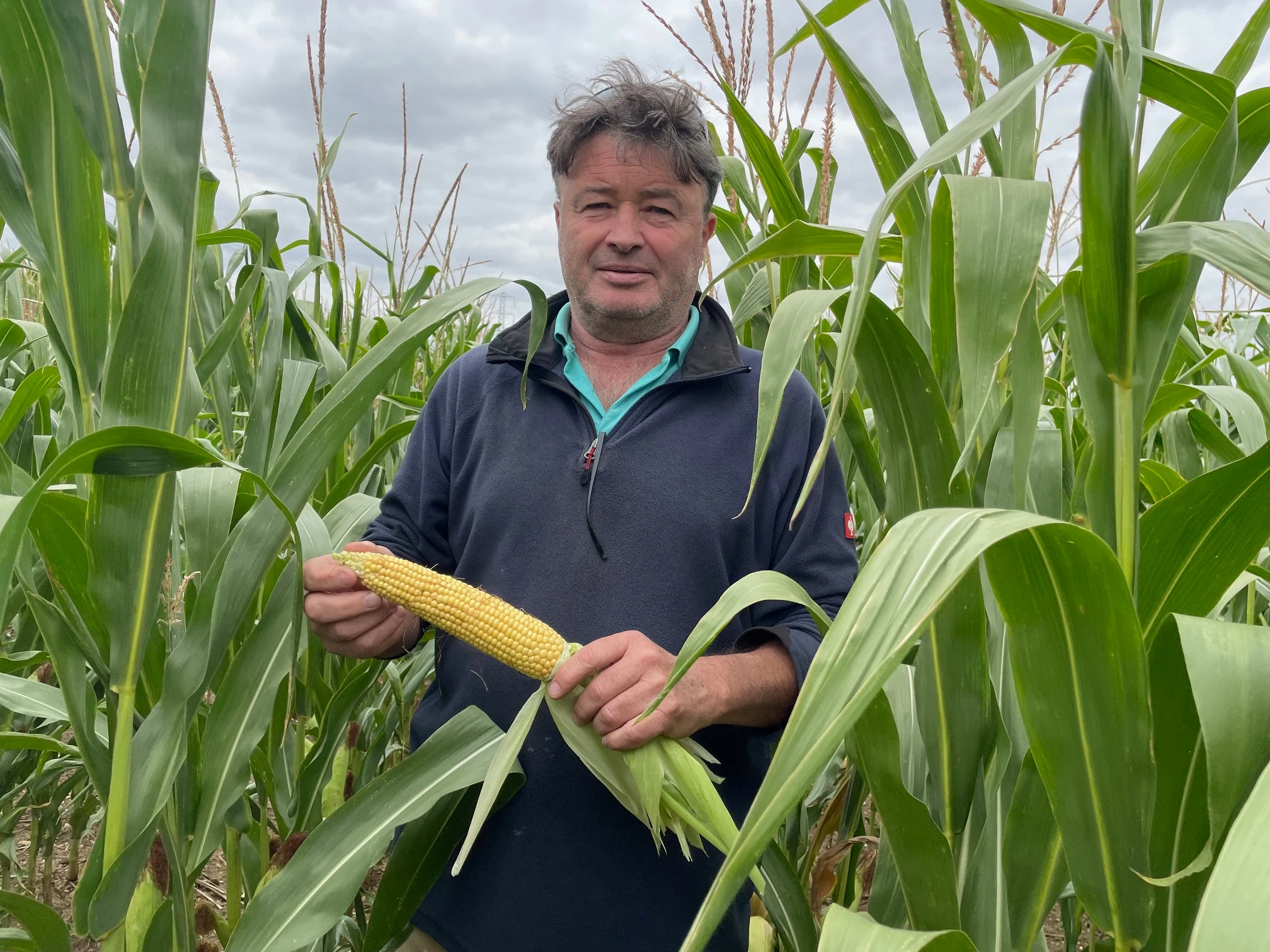
Howard Williams - Cattlegate Farm
Farm approach
After four years of maize, Howard insists he is by no means a seasoned grower, but with Barry’s help he has developed an approach that works well on the two farms.
“We use a contractor for plantingand harvesting as they are specialist operations, but we do all the cultivations and apply the digestate prior to drilling, as well as the spraying and top dressing.
“We try to utilise the digestate from the AD plant as much as possible. A crop like maize needs available nutrition - it needs to hit the ground, running and really get away quickly.
“It will supply a big chunk of the maize nutrition, although we may put a little bit of nitrogen down with the seed, depending on the soil indices and how much digestate we’ve put on,” says Howard.
Maize is preceded by a cover crop on both farms, in the form of aCSAM2 multi species winter cover on the light land and either CSAM2 or ALH2 winter bird food on the heavy land.
Cultivations on the light land typically comprise one pass with a disc/tine cultivator followed by rolling.
“Then the drill can come in and drill straight into it,” says Howard.
“On the heavier ground we will disc with a light set of discs, because we want to be gentler and not create too much clod and then put a low disturbance subsoiler through to ensure that there's no compaction and then roll.”
With no significant grass-weed problems, weed control is relatively straightforward, based on a pre-emergence herbicide followed up with a post-em contact if conditions are dry.
“We don't struggle with disease here either,” adds Barry. “We're not wet enough to worry about eyespot and fusarium doesn't seem to be a problem either. You might apply a fungicide to a maize crop one in 10 years in this area.”
Target dry matter at harvest is 32% and above, with stay-green varieties favoured for their ability to reach optimum dry matter and cobs to ripen without the plant drying down rapidly.
Howard’s approach to growing maize across two very different soil types highlights why maize variety selection is about much more than yield. Next season’s variety choice will ultimately be shaped by his farming system and business goals in an evolving marketplace.
------
DEKALB® is a Registered Trademark of the Bayer group. All other brand names used are Trademarks of other manufacturers in which proprietary rights may exist. For further information, including contact details, visit www.cropscience.bayer.co.uk or call 0808 1969522. ©️ Bayer CropScience Ltd 2025.