Author
Gareth Bubb | 8th July 2026Tags
July agronomy insights: West & South West
Across the West and South West this spring, agronomists have faced a familiar mix of challenges: extreme weather, yellow rust arriving earlier and harder than usual, high Septoria risk and potatoes demanding more thought on blight, irrigation and aphids. July, despite being busy with winter barley and oilseed rape harvesting, is a good time to look back at what the year has taught us while it is still fresh in the memory and look ahead to harvest and next season’s plans.
What we learned at Callow in the heat
Our recent demo day at Callow, Herefordshire on 25 June 2026 was a good test of how to run a meaningful field event in difficult conditions. With high temperatures forecast, we brought the first tours forward to 8am, added more water and shade in the field, and trimmed tour length where we could without shutting down conversations. Customers appreciated the early start – they could walk the site in cooler conditions and still have time for other jobs later in the day.
“I was really pleased with the way the team adapted and looked out for each other in the hot weather… everybody managed the day very well.”
The variety runs, put together by Rebecca and Mike from ADAS, gave a very clear picture of how this season has evolved. There was plenty of Septoria across the main candidate varieties, but brown rust was also starting to come in, and the impact of Yr15 breakdown on yellow‑rust‑prone varieties was obvious. That mix of Septoria, brown rust and intense yellow rust pressure set the backdrop for the fungicide and variety discussions.
Innovation at work: a new way of seeing protectant vs curative
Alongside the variety runs, we had fungicide comparisons looking at Bayer options and market standards. In the T1 trial, Plaxium® performed very strongly and, in the T2 slot, Jessico® Fusion was again one of the tidier treatments. Adding isoflucypram in products such as Vimoy® and Plaxium® gave visibly cleaner leaves on varieties susceptible to yellow and brown rust compared with programmes without that active in this trial. Those differences are the sort of thing you only fully appreciate when you see them side‑by‑side in the field.
New for this year was a fungicide photo board to illustrate the differences between protectant and more curative fungicide activity. When yellow rust came into the Champion variety used for Rust Alley early, we marked individual leaves in each treatment – some with visible symptoms and some without. Those same leaves were then photographed from a day or two after spraying right through to around 40 days after the T1 application.
“I’ve been thinking about doing this for a while, because there’s a bit of a lack of knowledge or misinformation about how the actives work in a purely protective situation versus a more curative one.”
The sequence shows how each fungicide behaves when it is put on clean tissue versus established disease and makes the differences in activity between treatments much easier to explain. Although we only showed the yellow rust series on the day, we also now have a similar set of images for brown rust which can be used as a future case study.
One of the points the photo board helps to make is that yellow rust and brown rust are not just two names for the same problem. They respond to different conditions, sporulate differently and can respond differently to the same fungicide programme. Having real leaf‑level examples gives a more grounded way to discuss mode of action and timing than a purely theoretical explanation.
Crop Doctor T1 – Yellow Rust vs Septoria in 2026
Looking back to Crop Doctor at T1, this has been the earliest and most persistent yellow rust season Gareth has seen at that site.
“One of the surprises was how the adult plant resistance kicked in – some varieties that looked really bad early on didn’t necessarily end up the worst by the end.”
Coming into the season, many of us expected a very high Septoria year based on risk and drilling date. In the end, less April rainfall and cooler temperatures meant Septoria pressure did not blow up to quite the level it could have. However, in varieties that are highly susceptible, yellow rust tended to dominate the picture and mask Septoria. In those with lower yellow rust susceptibility, the Septoria differences between treatments were much clearer. A lot of visitors commented that they had seen more yellow rust at Callow than at any of the other trial sites they had walked, which underlines how unusual this year has been.
The lesson for the West and South West is that this season should not be treated as a one‑off. It has shown how quickly yellow rust can develop on certain varieties and how important it is to think about where actives are placed in programmes. Label restrictions still have to be respected, so being canny with timing and variety choice becomes the main lever.
Variety choice and planning in July
One of the practical outcomes from this season is how we think about variety choice.
“You’re probably not going to find a wheat that never gets yellow rust, so the aim is to put together an acreage that’s manageable rather than unmanageable.”
That means understanding which varieties are most susceptible, how they behave under local races, and making sure that the total area of the highest‑risk types is something you can realistically keep on top of.
July is also a good moment to step back and assess grassweed control. Before the combine goes into fields, it is worth taking time to walk crops and identify where black‑grass and other grassweeds have broken through. Those worst fields can then be earmarked for later drilling or different rotational approaches next season. Making notes now helps avoid relying on memory once harvest pressure takes over and plans have to be made quickly in August and September.
Potatoes – blight, early blight and aphids
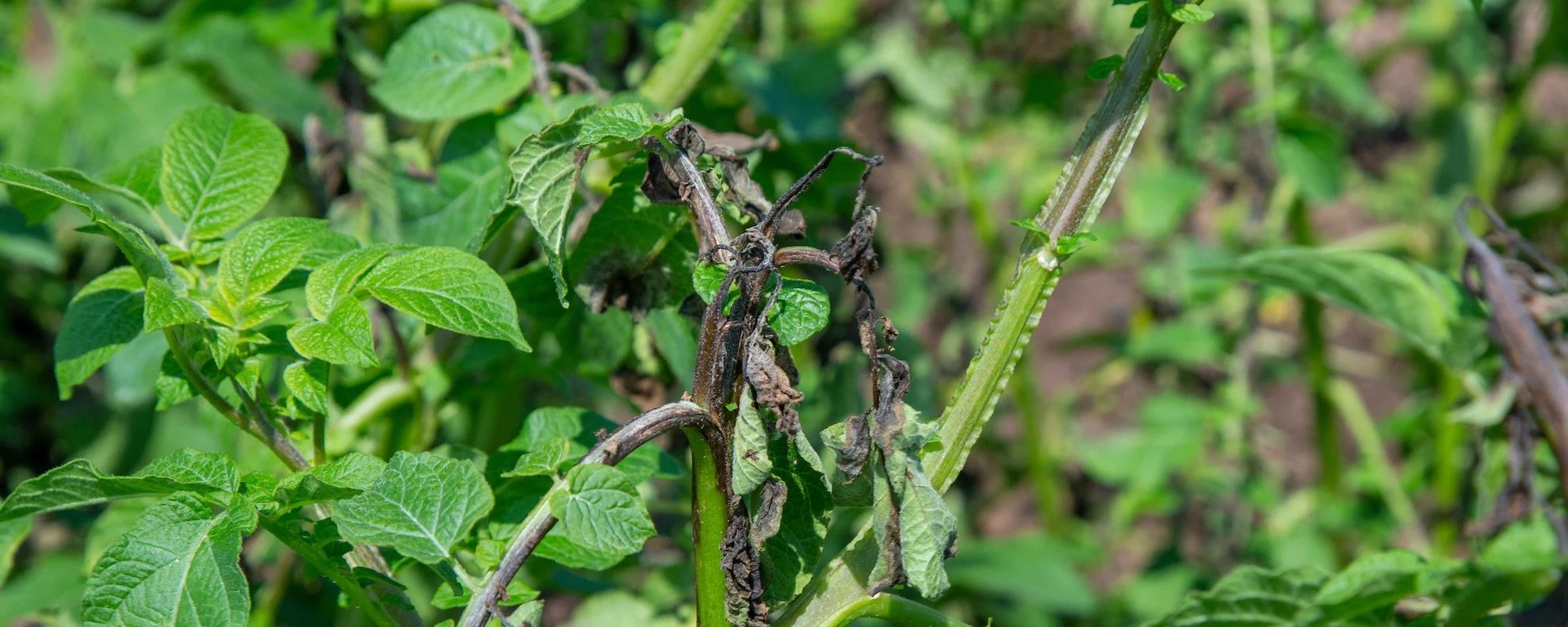
For potato growers, July is firmly into blight season, and Gareth is keen to emphasise that:
“Blight is one of those things where you can’t take your foot off the gas, despite what you might think.”
There has been more discussion this year about early blight and the impact of no longer using mancozeb, but it is important to remember that blight and early blight are two different problems and that one spray does not necessarily address both.
Keeping on top of late blight with a robust programme remains essential. Products such as Infinito®, which combine two actives in a single can, can simplify decision‑making because the partner actives are already combined, rather than having to build two‑active mixes in the sprayer each time. Where irrigation is used, it needs to be factored carefully into the programme so that applications and watering work together rather than against each other. Gareth notes that he has had more calls this season about early blight strategy and mancozeb alternatives than in previous years, so he has encouraged agronomists to look at alternative products such as Caligula® for early blight. This needs to be built into the programme on top of, not as a replacement for, the planned late blight products, so it does take some planning.
Aphid control and virus risk are another area where July decisions matter. Here it is important to start with the purpose of the crop. For seed producers the threshold for aphid intervention will be very different to ware crops. Growers need to be clear about why they are spraying and what they are trying to protect. New options such as Sivanto® Prime have given us another tool, but their use still needs to be justified in the context of crop purpose and overall resistance management.
This year has been a good reminder of just how fast things like yellow rust and blight can get away from us if we’re not on the front foot. If we can use what we’ve seen this season – the varieties that kept cleaner, the timings that worked and the fields that caught us out – then July becomes a chance to tighten things up so we go into harvest, and next season, that bit better prepared across the West and South West.
Plaxium® contains prothioconazole and isoflucypram. Jessico® Fusion contains bixafen and prothioconazole. Vimoy® contains isoflucypram. Infinito® contains fluopicolide and propamocarb hydrochloride. Caligula® contains fluopyram and prothioconazole. Sivanto® Prime contains flupyradifurone. Plaxium, Jessico, Vimoy, Infinito, Caligula and Sivanto are registered trademarks of Bayer. All other brand names used are Trademarks of other manufacturers in which proprietary rights may exist. Use plant protection products safely. Always read the label and product information before use. Pay attention to the risk indications and follow the safety precautions on the label. For further information, including contact details, visit www.cropscience.bayer.co.uk or call 0808 1969522. © Bayer CropScience Limited 2026