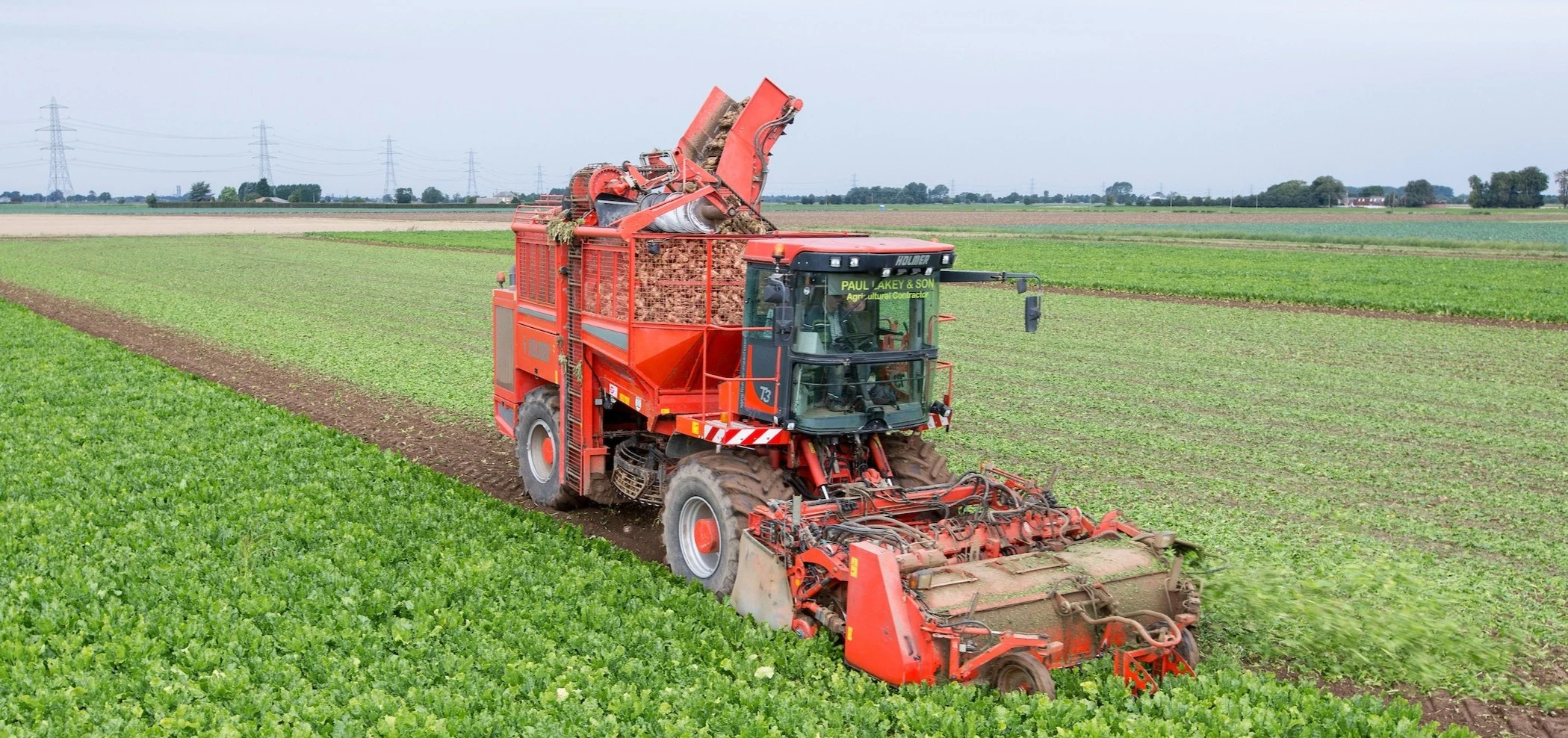
After a prolonged dry spell, recent rain has changed the pace across the Midlands. Darren Adkins looks at getting autumn establishment right, using stale seedbeds, making realistic choices on pre- and post-emergence herbicides, and protecting remaining sugar beet potential.
Author
Darren Adkins | 16th September 2026Tags
Midlands September agronomy advice: drilling, weeds and crop recovery
After such a dry spring and summer, the rain has made a welcome change across the Midlands. Amounts have varied, but there has been enough in many places to freshen stubbles, get cultivations moving and provide something more encouraging to drill into.
A lot of oilseed rape went into dry ground and simply sat there waiting. That can feel like a gamble at the time, but with no moisture available there was little danger of it germinating and dying. Now that rain has arrived, some of those crops are moving quickly and the attention turns to keeping them clean and protecting the establishment we have achieved.
Winter barley drilling is about to start in earnest in many areas, with wheat soon behind it. Once that starts, autumn moves quickly. The key is to make the most of the opportunities now, rather than create a grass-weed problem that has to be dealt with expensively inside the crop later.
Oilseed rape – a good starts need looking after
Early-drilled OSR is generally looking well where it caught the rain. Crops are emerging rapidly in warm, moist seedbeds, and some are already moving into the three- to four-leaf stage.
That does not mean they can be forgotten about. Slugs remain a risk in newly emerging crops, especially where there is plenty of trash on the surface or crop growth is uneven. Cabbage stem flea beetle has been relatively quiet in many places compared with some seasons, but it is still worth monitoring later-drilled crops that are more vulnerable if they are slow to get away.
The other issue to keep on top of is volunteers and grass weeds. Where rape was drilled before a proper stale seedbed opportunity, cereal volunteers, black grass and rye-grass can emerge alongside the crop. Volunteer cereals are usually straightforward enough to remove, but they should not be ignored because they can form a green bridge for aphids before newly drilled cereals emerge.
Black grass and rye-grass are a different challenge. The priority is to deal with them while they are small and actively growing. Waiting until later in the autumn reduces the likelihood of a good result, and it is still a long way from the sensible timing for propyzamide-containing products.
Winter barley – sequencing will deliver best results
We are looking to begin drilling winter barley shortly. Where land has had a light cultivation and a decent flush of grass weeds has been encouraged, there is a real opportunity to take those weeds out before the crop goes in. That remains a much more reliable and cost-effective starting point than relying solely on in-crop herbicides.
Once barley is drilled, the best approach will depend on the drilling date, soil conditions and whether there is a realistic prospect of getting back onto the land. In September-drilled crops, sequencing residual herbicides can be preferable to putting everything into one pre-emergence pass.
A robust pre-emergence spray followed by an early post-emergence residual can extend the period of protection, particularly where grass weeds continue to emerge through the autumn. Splitting the programme can also reduce the crop-effect risk associated with stacking several residual actives at one timing.
As Darren puts it, “stacking everything in one go is inherently more risky in terms of crop damage than splitting it into two doses.” The important qualification is that a sequence only works if the follow-up treatment can actually be applied in the right window.
On heavier ground, or when drilling moves later and autumn weather becomes more unsettled, it may be better to secure the strongest appropriate pre-emergence programme at the outset. There is little point in holding active ingredients back for a post-emergence application if field access is likely to disappear.
Whatever the programme, seedbed quality and seed depth matter. Barley can emerge quickly in warm, moist conditions, so pre-emergence treatments need to be applied promptly after drilling, while still following the product label and checking that seed is adequately covered.
Winter wheat – do not rush past the stale seedbed
Once barley drilling starts, there is always pressure to carry on into winter wheat. But with difficult grass weeds, especially black grass and rye-grass, it pays to pause where the conditions allow.
A shallow cultivation and a genuine stale seedbed can make a major difference. Let grass weeds germinate, then remove them before drilling. It is cheaper, cleaner and less risky than allowing them into the crop and asking the residual programme to carry the whole burden.
Early-drilled wheat often requires a more robust and more expensive herbicide programme because grass weeds can continue emerging throughout autumn and into winter. September drilling will commonly need a true pre-emergence application and, where practical, an early post-emergence follow-up to maintain residual activity.
Later October drilling can reduce the overall weed burden and may allow a simpler programme, but drilling date should never be the only decision driver. Seedbed conditions, the level of grass-weed pressure and whether drilling can be carried out well all matter more than simply chasing the calendar.
The farms that will do best this autumn are the ones that focus on the basics. Darren’s advice is straightforward: “A pre-em within 48 hours costs the same as a pre-em within two weeks, but it’s always going to be more effective to be early than late.”
Sugar beet – protect the remaining potential
Sugar beet has had a difficult summer and some crops are looking well below their usual potential. The rain has brought some welcome recovery, but where growers are considering leaving crops in the ground longer to gain further yield, green leaf area will remain important.
Powdery mildew is appearing on older leaves in some crops, with rust, Cercospora and Ramularia also worth monitoring. It may seem counter-intuitive to invest further in a crop affected by drought, but where there is still a useful canopy and sufficient season left, protecting healthy new growth can help crops make the most of the remaining growing period.
Caligula® is authorised in sugar beet for powdery mildew, rust, Cercospora leaf spot and Ramularia leaf spot. It should be considered where disease is present and where protecting green leaf area supports the decision to retain crops in the ground.
Potatoes – let the crop keep bulking
There is relatively little to report in potatoes at the moment. Crops have been through a testing dry period, but recent rain should help them continue bulking where there is still yield to gain.
There is no need to rush lifting and leaving them in the bed will save storage costs if crops are still adding value in the field. The decision should be based on crop maturity, soil conditions, weather and market requirements. For now, the focus is on monitoring crop condition and allowing the crop to use the rain where it can.
Jobs for the next few weeks
Monitor emerging OSR for slug activity, cabbage stem flea beetle damage, cereal volunteers and grass weeds. Remove volunteers and grass weeds early where needed and remember that volunteer cereals can provide a green bridge for aphids.
Plan winter barley residual programmes before drilling. Aim to apply pre-emergence herbicides promptly after drilling where conditions allow but choose between a sequence and a stronger one-shot approach based on likely field access.
Use stale seedbeds before winter wheat wherever possible. Encourage grass weeds to germinate, then remove them before drilling rather than relying entirely on in-crop treatments.
Check sugar beet regularly for powdery mildew and other foliar diseases. Where disease is present and the crop is likely to remain in the ground, maintain green leaf area to help protect remaining root yield potential.
Looking ahead – clean crops, minimal crop damage
A successful autumn will not necessarily be the one with the biggest herbicide spend or the earliest drilling date. It will be the one that leaves growers with clean crops, sensible crop safety and fewer problems to carry into the spring.
“Fairly clean crops with minimal crop damage” is a good measure of success by Christmas. Achieving that comes back to product choice, timing, seedbed preparation and making practical decisions based on the weather and the likelihood of getting back into the field.
About Darren Adkins
Darren Adkins provides practical agronomy support for arable growers across the Midlands. His focus is on helping growers make workable, field-by-field decisions around crop establishment, grass-weed management and disease control. His approach is straightforward: get the basics right, act when the opportunity is there and avoid creating problems that will cost more to solve later.
Caligula® contains fluopyram and prothioconazole. Caligula is a registered trademark of Bayer. All other brand names used are Trademarks of other manufacturers in which proprietary rights may exist. Use plant protection products safely. Always read the label and product information before use. Pay attention to the risk indications and follow the safety precautions on the label. For further information, including contact details, visit www.cropscience.bayer.co.uk or call 0808 1969522. © Bayer CropScience Limited 2026